## How Professional Amplifiers for Event Sound Systems Work
Professional amplifiers play a crucial role in event sound systems, ensuring that audio signals are delivered with clarity and power. These amplifiers elevate weak audio signals generated by microphones, instruments, or sound mixers to levels suitable for large venues, guaranteeing that every note, beat, and word resonates throughout the audience.
At the core of a professional amplifier are key components such as the power supply, input stage, driver stage, and output stage. The power supply transforms the electrical current from a wall outlet into the necessary voltage levels needed for audio processing. The input stage receives the audio signals and prepares them for amplification. This involves adjusting the signal's impedance to match the characteristics of the amplifier, which is crucial for optimizing performance.
Next, the driver stage is where the magic of amplification occurs. Here, the audio signals are boosted through various circuit techniques. Class A, Class B, Class AB, and Class D are the common amplification classes, each with its own efficiency and sound quality characteristics. Class D amplifiers, for example, utilize advanced switching technology, allowing for high efficiency and minimal heat generation, making them ideal for portable sound applications where power consumption is critical.
The output stage then takes the amplified signals and sends them to the speakers. High-quality amplifiers incorporate advanced feedback mechanisms that help maintain sound fidelity, ensuring that unwanted distortions are minimized. This focus on clarity is particularly essential during live events, where sound quality can greatly influence the audience's experience.
Modern amplifiers also leverage advanced technologies like digital signal processing (DSP). DSP allows real-time adjustments to equalization, compression, and delays to fine-tune the sound for varying environments. For example, during a concert in an outdoor venue, DSP can automatically adjust the sound to account for factors like wind and distance, creating a consistent listening experience for attendees.
In practical terms, consider a music festival where multiple acts perform over several stages. A professional amplifier can dynamically adapt to the varying audio requirements of each performance, ensuring that every artist is heard at their best regardless of the crowd size or venue acoustics. This adaptability is critical in delivering engaging performances that leave lasting impressions.
In conclusion, professional amplifiers are indispensable tools that utilize advanced technology to enhance audio quality in live event sound systems. Their efficient production processes and sophisticated mechanisms not only improve sound delivery but also elevate the overall event experience. If you are looking for reliable suppliers to enhance your audio solutions, contact us for more information.


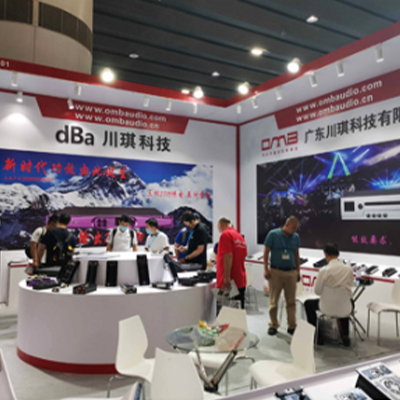
 Custom Audio Amplifier Manufacturer