## Understanding High Power Professional Amplifiers for PA Systems
High Power Professional Amplifiers for PA (Public Address) Systems are engineered to deliver superior audio quality and reliability in various environments, from concerts to conferences. Understanding how these amplifiers work involves a closer look at their key components and the advanced technologies they employ.
At the core of a professional amplifier is its amplifier circuit, which typically utilizes transistors or integrated circuits to boost audio signals. These amplifiers operate by taking a low-level audio signal, often from a microphone or instrument, and increasing its power so that it can drive speakers effectively. The key components include the power supply, input stage, amplification stage, and output stage.
1. **Power Supply**: This is critical for ensuring that the amplifier receives the necessary voltage and current. In high power amplifiers, power supplies often employ advanced technologies like switch-mode power supply (SMPS), which are more efficient and lighter than traditional linear power supplies.
2. **Input Stage**: Here, the audio signal is conditioned for amplification. This stage includes preamp circuits that adjust the signal's impedance, providing a balanced input to reduce noise and interference.
3. **Amplification Stage**: This is where the magic happens. The audio signal is amplified using various configurations (such as Class A, Class B, or Class D). For instance, Class D amplifiers are particularly popular in high power settings due to their efficiency and compact size; they can deliver high power output with minimal heat generation, which means less cooling is necessary.
4. **Output Stage**: This portion delivers the amplified signal to the speakers. Advanced output stages may use sophisticated protection circuits to prevent damage from overloads or short circuits, ensuring the longevity of both the amplifier and the connected speakers.
The advanced technology applied in these amplifiers facilitates efficient production processes in manufacturing. Automation in the assembly and testing phases of amplifier production ensures high-quality standards are met consistently. For example, the use of digital signal processing (DSP) in amplifiers allows for real-time adjustments to sound quality, achieving the desired output regardless of the environment.
Practical applications of High Power Professional Amplifiers include live concert events where high sound pressure levels are needed, large auditoriums requiring clear speech intelligibility, and outdoor festivals that necessitate robust sound coverage over vast spaces.
In conclusion, high power professional amplifiers are vital components in PA systems, providing clear, powerful sound for diverse applications. As technology continues to advance, these systems will only become more efficient and versatile. Manufacturers looking for reliable suppliers of these amplifiers or seeking further information are encouraged to contact us for assistance.


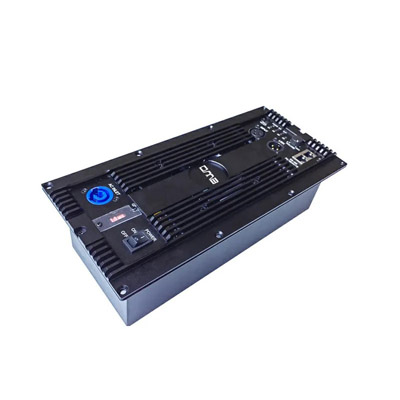
 Oem Custom Audio Amplifier Manufacturer