
May. 28, 2026
Professional Audio Amplifiers, such as the Technical Pro Amplifier series, cater to audiophiles, musicians, and sound engineers seeking to enhance sound quality in live performances or recording studios. They solve common problems associated with inadequate sound output, including distortion, loss of fidelity, and insufficient power. This article provides an in-depth exploration of professional audio amplifiers, addressing users' challenges with details that inform and guide beginners in making educated decisions.
To grasp the concept of a professional audio amplifier, it is essential to understand key terminology and principles. A professional audio amplifier is an electronic device designed to amplify low-level audio signals to a level that can effectively drive loudspeakers. The fundamental principles involve gain, impedance, and distortion ratings. For instance, industry-standard amplifiers typically feature a total harmonic distortion (THD) rating of less than 0.1%, ensuring clear and uncolored sound output. Furthermore, the gain of an amplifier is measured in decibels (dB), where a 10 dB increase represents a tenfold increase in power.
Gain: The ratio of the output signal strength to the input signal strength, typically expressed in decibels (dB).
Impedance: The resistance of a circuit to alternating current, measured in ohms (Ω); critical to match with speaker ratings for optimal performance.
Signal-to-Noise Ratio (SNR): A measure comparing the level of a desired signal to the level of background noise, expressed in decibels.
When selecting a professional audio amplifier, follow these detailed steps to ensure effective performance:
Assess Your Needs: Evaluate the scale of your audio requirements, whether for personal use, public venues, or recording studios. This initial step is crucial in determining the power output needed, usually measured in watts.
Determine the Desired Output Power: Professional amplifiers typically range from 100 watts to over 1000 watts per channel. Consider the loudspeaker power rating. For example, if your speakers are rated at 500 watts continuous, choose an amplifier that can deliver at least 600 watts.
Check Impedance Compatibility: Ensure the amplifier's output impedance matches the impedance rating of your speakers. Most professional audio systems operate at 4, 6, or 8 ohms.
Analyze Total Harmonic Distortion Levels: Choose amplifiers with THD ratings of less than 0.1%, as lower distortion equates to more accurate sound reproduction.
Consider Signal-to-Noise Ratio: SNR ratings of 100 dB or higher are ideal for minimizing background noise, enhancing the clarity of your audio.
Evaluate Additional Features: Look for features such as built-in crossovers, EQ settings, and digital signal processing (DSP) capabilities, which enable greater control over your audio output.
Test the Amplifier: Whenever possible, listen to the amplifier with your loudspeakers to assess the sound quality. Pay attention to clarity, power, and overall tonal balance.
What wattage do I need for live performances? A general rule of thumb is to aim for 500 to 1000 watts per channel for small to medium venues.
Can I use a home audio amplifier for professional purposes? While some home amplifiers may suffice, they often lack the power and durability required for professional audio applications.
How do I connect my amplifier to speakers? Use quality speaker wires, ensuring correct polarity. Connect the positive and negative terminals appropriately to avoid phase issues.
For those looking to take their audio amplification skills further, consider exploring advanced topics such as the effects of amp class (Class A, Class B, Class D), and the benefits of using bi-amping or tri-amping in multi-driver speaker systems. Additionally, understanding how to utilize impedance matching ensures greater efficiency and performance from your system.
In conclusion, selecting the right professional audio amplifier involves careful analysis of power output, impedance ratings, and distortion levels. To ensure exceptional audio experiences, brands like OMB offer various amplifiers tailored to meet diverse needs. For inquiries and recommendations tailored to your situation, feel free to contact OMB 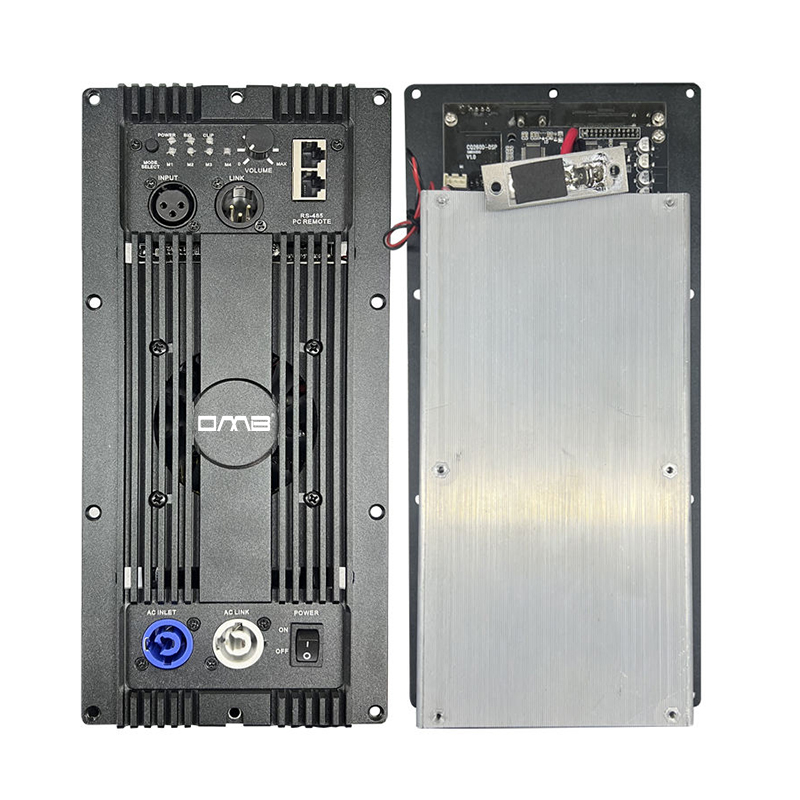 . Building a superior audio setup is achievable with the right knowledge and tools.
Want to speak to us?
Our team of experienced experts can't wait to help you find the right solution for your business.
Related Products

VR1000 2×1000W Class D Professional Power Amplifier
From cost-effective 300W dual channel amplifiers to high-performance2000W four-channel amplifiers, we offer it all. With PFC(Power FactorCorrection)and intelligent track management, we meet all your power amplifier needs.

TX6K2 Pa Paging System Digital Audio Broadcast Combined Power Amplifier Series for Large Venues
TX6K2 Pa Paging System Digital Audio Broadcast Combined Power Amplifier Series for Large Venues

From cost-effective 300W dual channel amplifiers to high-performance2000W four-channel amplifiers, we offer it all.

Navigation
Navigation
Contact Us
+86 138 0987 4978
+86 138 0960 5077
+86 133 8005 1648
2nd Floor, Building 6, No. 341, Jinou Road, Jianghai District, Jiangmen City, Guangdong Province


